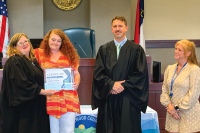
Mountain Projects celebrates 60 years of service, calls for community action
As Mountain Projects celebrates its 60th anniversary serving Haywood and Jackson Counties, the organization is marking a season of both reflection and action. Executive Director Patsy Davis, who has led the agency for 27 years, will retire this summer.
Budget increases, millage rate decreases in Jackson
The proposed Jackson County budget for fiscal year 2025-26 contains a six cent decrease in the millage rate, and yet, for most people in Jackson County, property tax bills will increase significantly.
Mountain Projects raises alarm on housing crisis
In the face of challenges with Section 8 rental assistance, Mountain Projects Executive Director Patsy Davis visited county commissions in both Haywood and Jackson counties this month to inform elected officials of just how dire the situation is becoming.
Bill would cut red tape in lumber industry
A bill introduced by Macon County Republican Rep. Karl Gillespie that seeks to bolster North Carolina’s local sawmill industry has garnered widespread bipartisan interest for its potential economic, environmental and housing affordability benefits.
Maggie Valley residents look to de-annex from town
A small group of property owners in Maggie Valley are taking advantage of Rep. Mark Pless’ offer to de-annex them from the town, with at least one citing development restrictions and others saying they’re not getting what they’re paying for.
Of truth and trust: Lack of accountability haunts charitable hurricane relief efforts
After Hurricane Helene completed its devastating march from the Gulf of Mexico to the Great Smoky Mountains, the struggles of disaster survivors — from environmental devastation and bureaucratic hurdles to inadequate recovery support — have exposed a broken cycle of aid and accountability, where truth and trust become enveloped in a murky ethical mist that consists, at least partially, of exploitative promises made worse by false premises and finger-pointing.
Gov. Stein promises intensive storm relief measures
Gov. Josh Stein has made it clear that he intends on prioritizing Hurricane Helene relief in Western North Carolina.
Shortly after being sworn in on Jan. 1, Stein issued six executive orders meant to expedite aid to the still-devastated region where some have complained about a slow response, especially when it comes to housing amid frigid temperatures.
Property values increasing in Jackson
A state-mandated, county-wide property reappraisal took effect on Jan. 1 this year.
Prior to the appeals process, the reappraisal showing a massive increase in real property taxable value for Jackson.
2024 A Look Back: Maconians united award
Maconians are known among the citizens of Western North Carolina for robust and regular public input at local government meetings and this year was no different. But there was one issue in particular that galvanized the citizens of Macon County to stand together and speak up — efforts to weaken the county’s floodplain ordinances.
Complaints aren't founded in truth
It is very hard for me to continue listening to the ongoing issues of housing when I know we have codes to follow that are set forth by the international/North Carolina building, electrical, plumbing and fire safety codes. My general contracting company and electrical contracting company have worked with everyone to help with people affected to gain some type of normal life during and after the storm.